Wall Street closes at a record for the first time since end of January
Investing.com-- Most Asian currencies moved in a tight range on Monday, while the dollar firmed as markets digested U.S. President Donald Trump’s nomination for the next chair of the Federal Reserve.
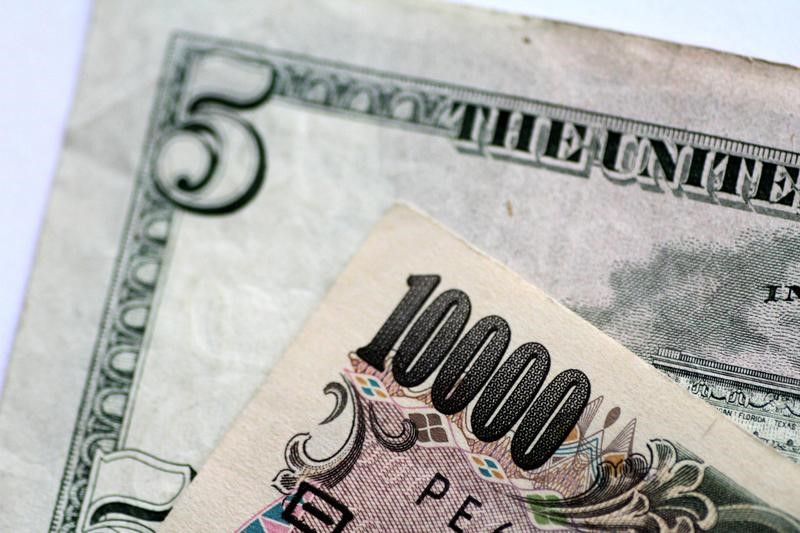
The Japanese yen weakened in whipsaw trade after comments from Prime Minister Sanae Takaichi appeared to downplay the potential for currency market intervention by Tokyo.
Get more insights on Asian currencies by upgrading to InvestingPro
Broader moves in Asian currencies were limited as markets looked to more upcoming economic cues this week, including a Reserve Bank of Australia meeting and key U.S. payrolls data.
Dollar upbeat after Trump nominates Warsh for Fed chair
The dollar index and dollar index futures rose about 0.1% each in Asian trade, extending gains from last week, where the greenback rebounded sharply from a near four-year low.
Gains in the dollar came chiefly after Trump nominated former Fed governor Kevin Warsh as his pick to replace incumbent chair Jerome Powell at the head of the central bank.
Warsh was seen largely agreeing with Trump’s calls for sharply lower rates. But he was also viewed as being critical of the Fed’s asset buying activities, suggesting that long-term monetary policy under Warsh may not be as dovish as markets were initially anticipating.
“We expect a Warsh-led Fed to favour a smaller balance sheet, thereby not facilitating large fiscal expansion,” ANZ analysts wrote in a note.
Still, they noted that “Warsh may emphasise labour weakness as the bigger risk to the Fed’s mandate of maximum employment and price stability,” and will likely support more interest rate cuts if confirmed in the coming months.
Powell’s term ends in May. The Fed chair had last week urged his successor to not be caught up in elected politics.
Japanese yen soft after Takaichi comments
The Japanese yen lagged its Asian peers on Monday, with the USD/JPY pair rising as much as 0.5% and trading above the 155 yen level.
Weakness in the yen came after Takaichi talked up the benefits of a softer currency during a recent campaign speech, which somewhat contrasted signals from her administration that warned against prolonged weakness in the currency.
Takaichi said a weaker yen benefited exporters, although she was seen softening her stance later.
A string of Japanese officials, including Takaichi herself, had warned markets against outsized moves in the yen, sparking concerns that government intervention was imminent.
The yen firmed sharply through January on this notion, although it still remained close to levels that have drawn government intervention in the past. Recent reports suggested that Japan and the U.S. were considering a joint operation to support the yen.
Broader Asian currencies moved in a flat-to-low range on Monday, amid a dearth of clear immediate signals. The Australian dollar’s AUD/USD pair rose fell 0.2%, with focus squarely on the conclusion of a Reserve Bank of Australia meeting on Tuesday, where the central bank is widely expected to raise interest rates by 25 basis points.
Bets on a RBA hike were fueled chiefly by data showing a resurgence in Australian inflation through the second half of 2025.
The South Korean won’s USD/KRW pair rose 0.5%, with the currency pressured by outsized outflows from local equity markets, as investors dumped major technology stocks.
The Chinese yuan’s USD/CNY pair was flat, showing little reaction to mixed purchasing managers index data for January.
The Singapore dollar’s USD/SGD pair fell 0.1%, while the Taiwan dollar’s USD/TWD pair was flat.
The Indian rupee’s USD/INR pair rose 0.2% and was close to recent record highs. Investors largely balked at the government’s fiscal 2027 budget, which outlined even more fiscal spending on shoring up manufacturing.